

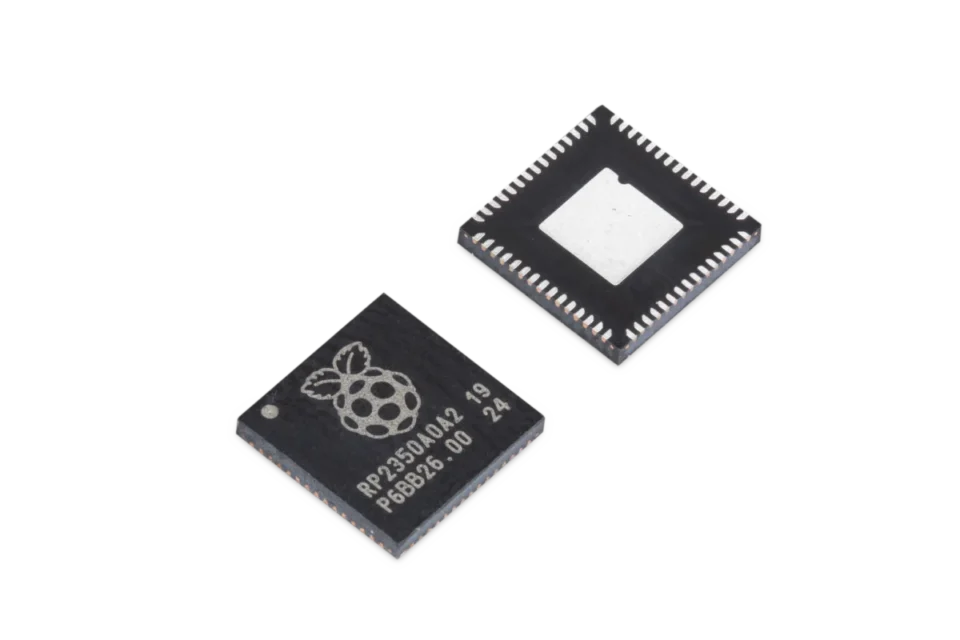
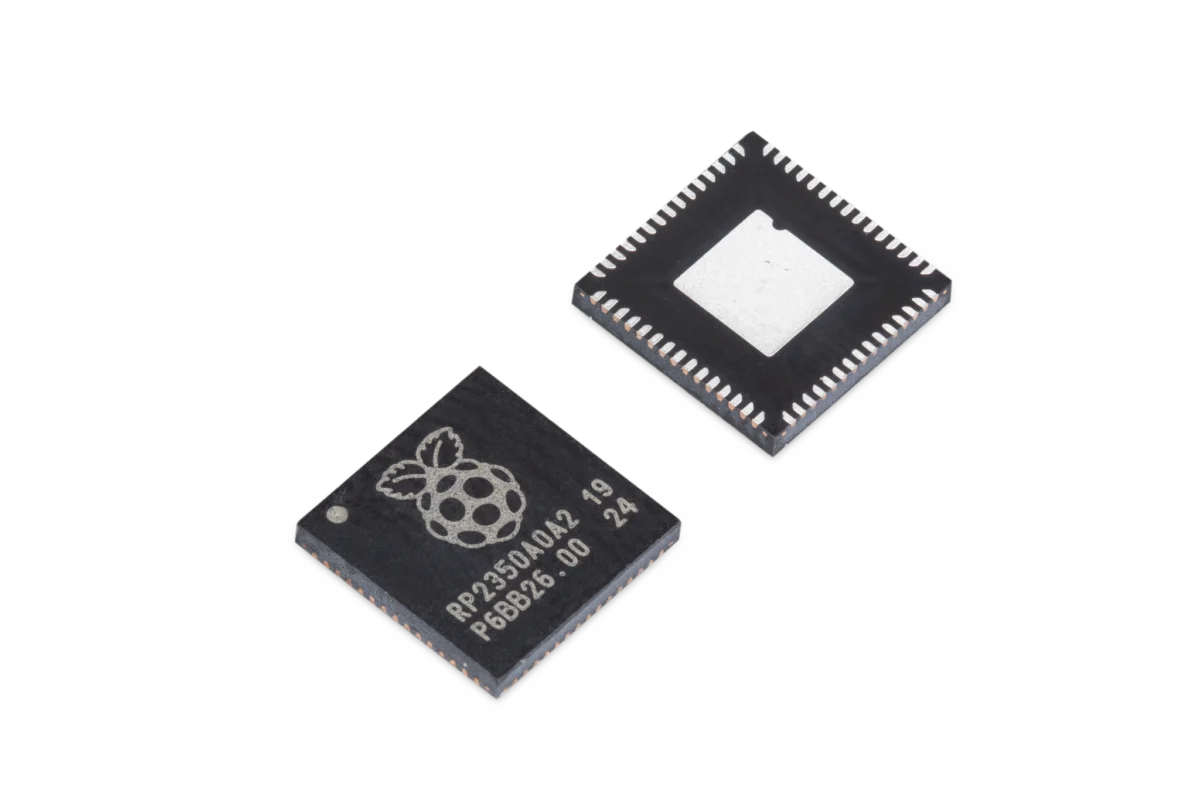
CAMBRIDGE, UK — Raspberry Pi, the British computing pioneer that transformed the hobbyist electronics market, has officially announced the launch of its dedicated podcast. This new media venture aims to provide a transparent, "behind-the-curtain" look at the organization’s design philosophy, engineering challenges, and its increasingly dominant role as a global semiconductor designer. The inaugural episode focuses on the RP2350, the highly anticipated successor to the company’s first in-house silicon, the RP2040.
The launch of the podcast signals a broader strategic shift for the company. While long celebrated for its accessible Single Board Computers (SBCs), Raspberry Pi has quietly evolved into a formidable player in the microcontroller market. This transition reached a historic milestone in 2025, when the company’s silicon sales surpassed its traditional board-level products for the first time.
Main Facts: A New Medium for Technical Transparency
The "Raspberry Pi Podcast" debuted this week across major streaming platforms, including Spotify, Apple Podcasts, Amazon Music, and YouTube. Hosted by key members of the organization’s commercial and engineering teams, the series is positioned not merely as a marketing tool, but as a technical archive for the community.
The premiere episode features Paul Sherry and Chris Boross from Raspberry Pi’s commercial team. Their discussion centers on the RP2350, a microcontroller designed to address the evolving needs of both industrial clients and the maker community. By launching this podcast, "Pi Towers" (the company’s Cambridge headquarters) aims to demystify the complex process of Application-Specific Integrated Circuit (ASIC) design and explain the rationale behind their hardware specifications.
Key revelations from the launch include:
- The Silicon Pivot: Raspberry Pi is now officially a "silicon-first" company in terms of unit volume.
- The RP2350 Value Proposition: Despite doubling the computational performance of its predecessor, the new chip maintains a disruptive price point of approximately $0.80 per unit in bulk.
- Architectural Innovation: The RP2350 includes a unique "dual-architecture" approach, offering both ARM and RISC-V cores to users.
- Direct Community Engagement: The company has coupled the podcast launch with an upcoming Reddit "Ask Me Anything" (AMA) featuring the executive leadership team.
Chronology: From Board Integrator to Silicon Architect
To understand the significance of the RP2350 and the new podcast, one must look back at Raspberry Pi’s trajectory over the last decade.
The Search for the Perfect Chip (2018–2020)
The journey into silicon began more than five years ago. At the time, the engineering team was developing what would eventually become the Raspberry Pi Pico. They sought a microcontroller that offered a specific balance of high-performance I/O, low power consumption, and a price point accessible to students. After finding that "off-the-shelf" solutions from traditional semiconductor giants were either too expensive or lacked the necessary flexibility, the company made the radical decision to design its own silicon.
The RP2040 Revolution (2021)
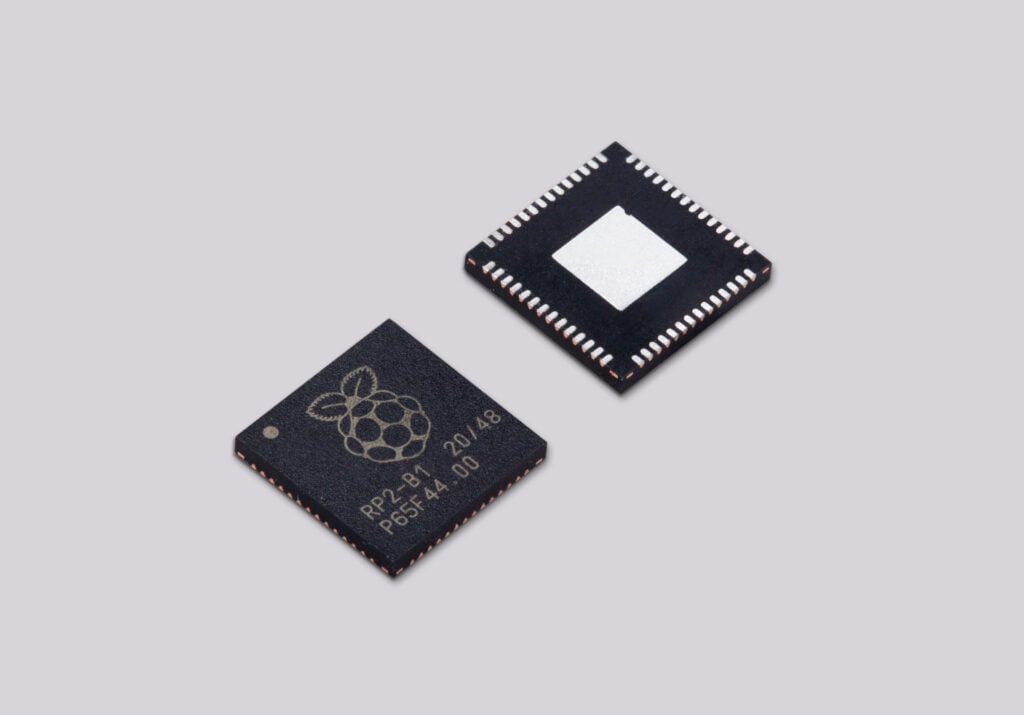
In January 2021, Raspberry Pi launched the RP2040. It was a landmark moment: a $4 microcontroller featuring a unique Programmable I/O (PIO) subsystem. While Raspberry Pi initially intended to use the chip solely for its own internal products, the demand from third-party manufacturers was immediate and overwhelming. The RP2040 went on to sell millions of units, powering everything from industrial sensors to mechanical keyboards and synthesizers.
Feedback and Refinement (2022–2024)
Following the success of the RP2040, the company began an intensive period of data collection. Commercial customers praised the chip’s ease of use but highlighted three critical areas for improvement: more robust hardware security for professional applications, increased memory headroom for complex software stacks, and more diverse I/O options.
The Era of RP2350 (2025)
By early 2025, the development of the RP2350 was complete. This new iteration was designed specifically to address the feedback gathered over the previous four years. The launch of the podcast coincides with the RP2350’s move into full-scale commercial availability, marking the point where Raspberry Pi’s silicon division officially outpaced its SBC division in annual sales volume.
Supporting Data: The Economics and Engineering of the RP2350
The technical specifications of the RP2350, as discussed in the podcast, highlight a significant leap in "performance-per-penny."
Computational Power and Efficiency
The RP2350 is built on a more advanced architecture than the RP2040. While the original chip utilized dual ARM Cortex-M0+ cores, the RP2350 upgrades this to dual ARM Cortex-M33 cores. This transition provides a substantial boost in processing power and introduces hardware-level floating-point support.
Perhaps the most surprising technical detail discussed by Boross and Sherry is the inclusion of two Hazard3 RISC-V cores. Users can choose to boot into either the ARM or the RISC-V environment. This "love letter to CPU enthusiasts" allows developers to experiment with the open-source RISC-V architecture at a negligible cost, potentially accelerating the adoption of RISC-V in the embedded space.
The "Disruptive" Price Point
In the semiconductor industry, doubling performance usually comes with a significant price hike. However, Raspberry Pi has maintained a razor-thin margin to ensure the chip remains "disruptive."
- RP2040 Price: Approximately $0.70 per unit (in reel quantities).
- RP2350 Price: Approximately $0.80 per unit (in reel quantities).
For an additional $0.10, customers receive double the compute power, significantly improved security features (including TrustZone), and a larger RAM footprint.
Market Shift
The 2025 sales figures cited by the company represent a fundamental shift in the "Prosumer" electronics market. For years, Raspberry Pi was synonymous with the $35 green circuit board. The fact that they now sell more individual chips than boards suggests that Raspberry Pi is becoming the "Intel or AMD" of the microcontroller world—providing the brains for thousands of other companies’ products.
Official Responses: Insights from Pi Towers
During the podcast, the commercial team emphasized that the RP2350 was a direct response to the community. Paul Sherry noted that the "ASIC team" at Raspberry Pi is now considered one of the most talented in-house groups in the business.
"We didn’t set out to be a silicon company," Sherry explained during the episode. "We set out to solve a problem for the Pico. But the market told us very clearly that there was a hunger for high-performance, low-cost silicon with great documentation."
Chris Boross elaborated on the inclusion of RISC-V, describing it as a strategic move to future-proof the ecosystem. "It’s about giving people choice. Whether you’re an industrial engineer who needs the proven reliability of ARM and TrustZone, or an enthusiast who wants to play with the latest RISC-V developments, the RP2350 has a place for you."
Furthering this commitment to transparency, Raspberry Pi has scheduled a Reddit AMA for Thursday, May 21, from 3:00 PM to 5:00 PM UK time. The session will feature:
- Eben Upton: CEO and Co-founder.
- Gordon Hollingworth: Chief Technology Officer.
- James Adams: Chief Technology Officer (Hardware).
The company joked in their announcement that the session would continue until "the comments descend into people telling Eben how much he looks like Jason Statham," a long-running joke within the Pi community.
Implications: The Future of Embedded Systems
The launch of the podcast and the detailed rollout of the RP2350 have significant implications for the technology sector at large.
1. Vertical Integration in Education and Industry
By designing their own silicon, Raspberry Pi has achieved a level of vertical integration usually reserved for giants like Apple or Tesla. This allows them to control the software-hardware interface more tightly than competitors who rely on third-party chips. For the educational sector, this means a more stable platform; for the industrial sector, it ensures long-term availability and lower costs.
2. The Democratization of Security
The inclusion of robust security features in an 80-cent chip is a game-changer for the Internet of Things (IoT). Previously, high-level hardware security was often gated behind more expensive, "industrial-grade" microcontrollers. By making security affordable, Raspberry Pi is effectively raising the floor for the entire IoT industry, potentially reducing the prevalence of vulnerable smart devices.
3. RISC-V Momentum
By placing RISC-V cores in the hands of millions of hobbyists and professionals, Raspberry Pi is providing a massive "test bed" for the architecture. This could lead to a surge in RISC-V software libraries and community support, challenging the long-standing dominance of proprietary instruction sets in the embedded market.
4. A New Model for Corporate Communication
The "Raspberry Pi Podcast" represents a shift toward "engineering-first" communication. In an era of polished, often vague corporate PR, Raspberry Pi’s decision to have their commercial and technical leads talk for an hour about silicon architecture suggests a deep trust in their audience’s intelligence. It reinforces the brand’s identity as a company built by engineers for engineers.
As Raspberry Pi continues its journey from a small educational charity to a global semiconductor powerhouse, the RP2350 stands as a testament to their original mission: making high-performance computing accessible to everyone. With the new podcast, the world now has a front-row seat to the next chapter of the "silicon franchise" at Pi Towers.